A closer look.
Follow a finding through supplier context, supporting evidence and the next review.
Demo and synthetic data are shown. Potential recovery needs validation and is not a customer result.
One finding. More context.
Use the product screens below as a starting point for this workflow.
- 01
Start with a finding.
Use the review queue to select an exception and understand why it needs attention.
- 02
Open the supplier context.
Review the supplier's activity, related findings and investigation history.
- 03
Trace the evidence.
Compare connected signals with the source transactions before drawing a conclusion.
- 04
Record and revisit.
Capture the investigation outcome. Compare compatible analyses to see new, changed or no longer detected findings.
Financial overview
Potential recovery, suppliers to review and open findings together. The saved analysis contains 2,364 synthetic records and 19 findings. Potential recovery is not confirmed loss.
Open full capture in a new tab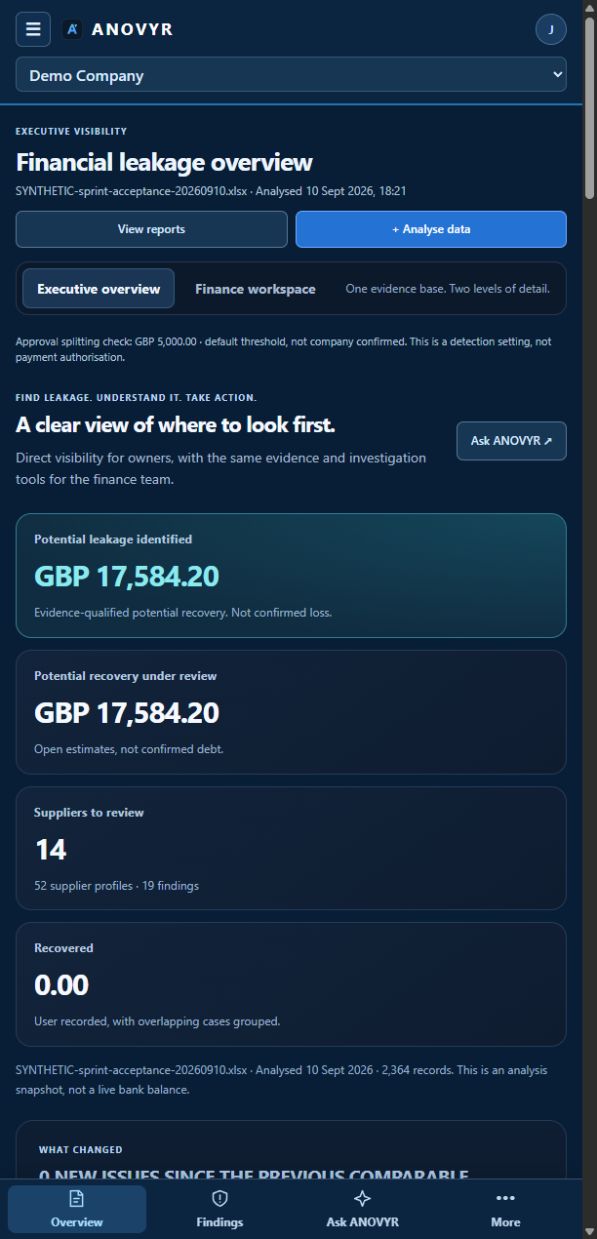
Analysis snapshot: 10 September 2026
Supplier intelligence
Open the supplier behind a finding. This synthetic profile keeps invoice activity, potential recovery and review context together. Invoice totals and payments remain separate measures.
Open full capture in a new tab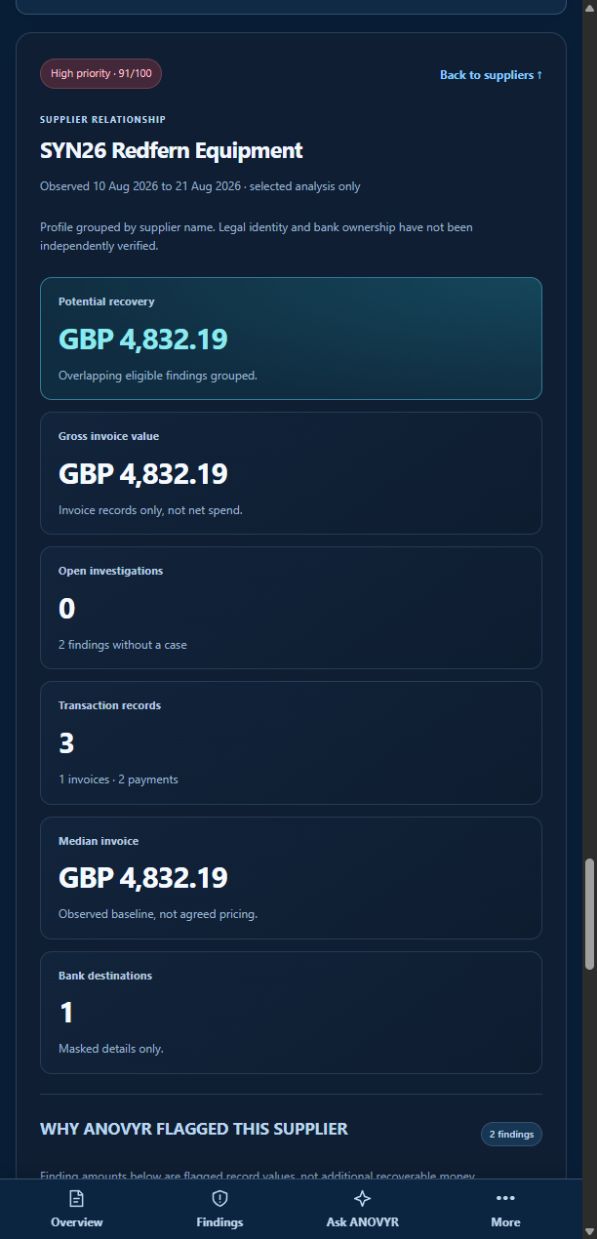
Analysis snapshot: 10 September 2026
Connected evidence
See why two control findings are connected through the same synthetic supplier and source transactions. Review priority and corroborating signals guide investigation; they do not establish wrongdoing.
Open full capture in a new tab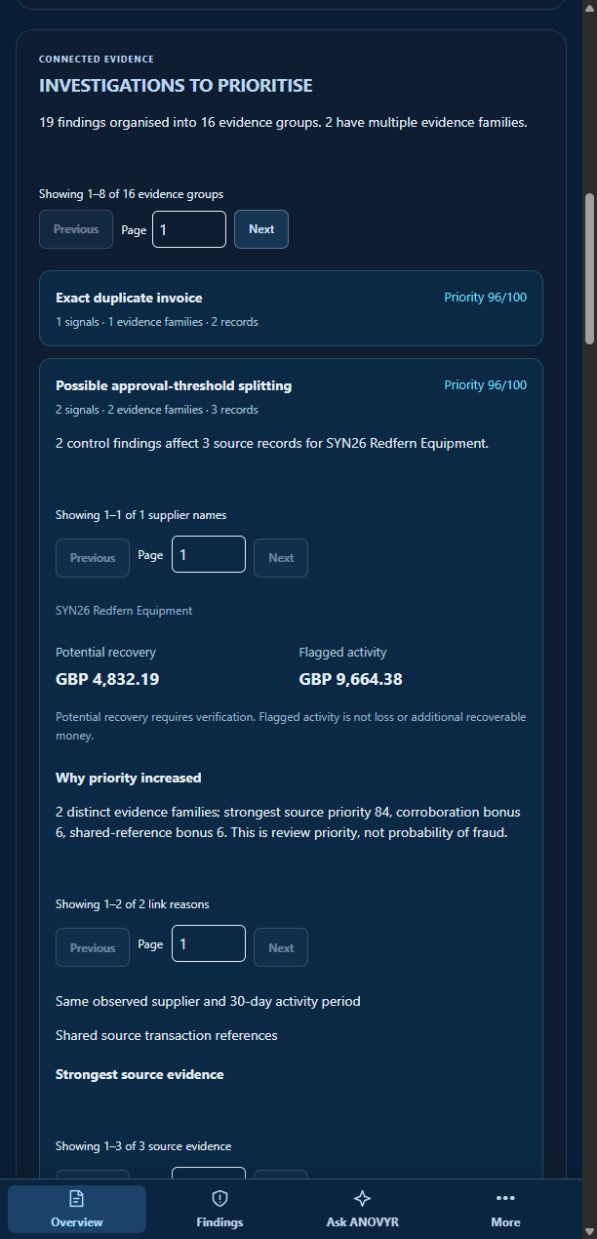
Analysis snapshot: 10 September 2026
Changes between analyses
This repeat of a synthetic analysis shows zero new issues and GBP 0.00 change in potential recovery. Findings no longer detected must still be reviewed; their absence does not confirm resolution.
Open full capture in a new tab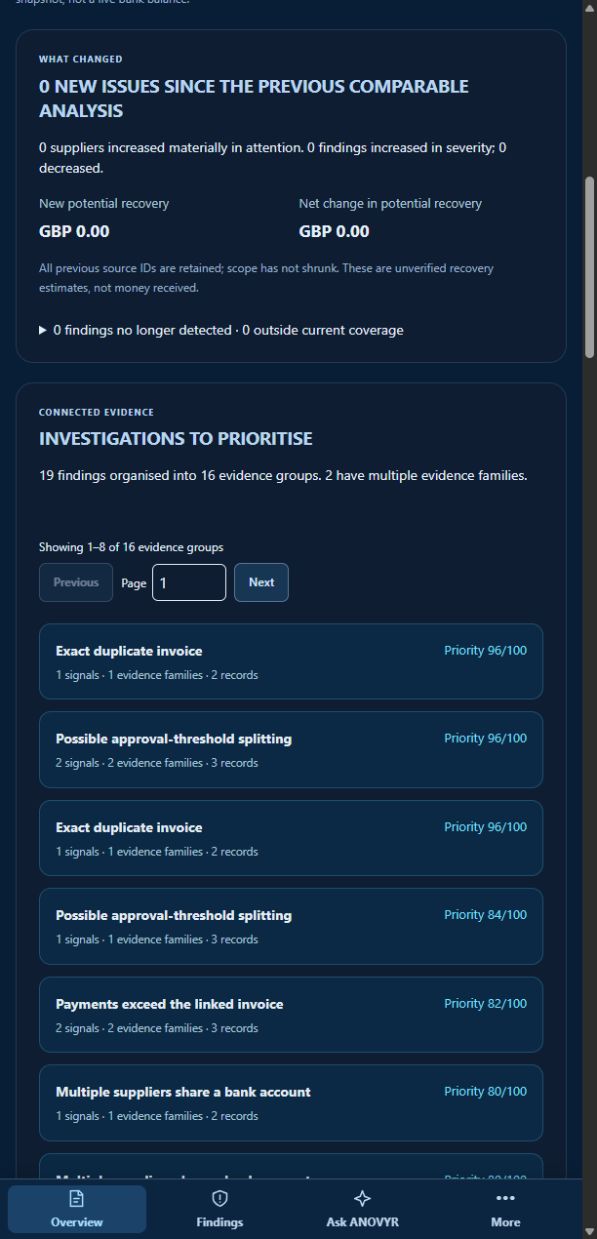
Analysis snapshot: 10 September 2026
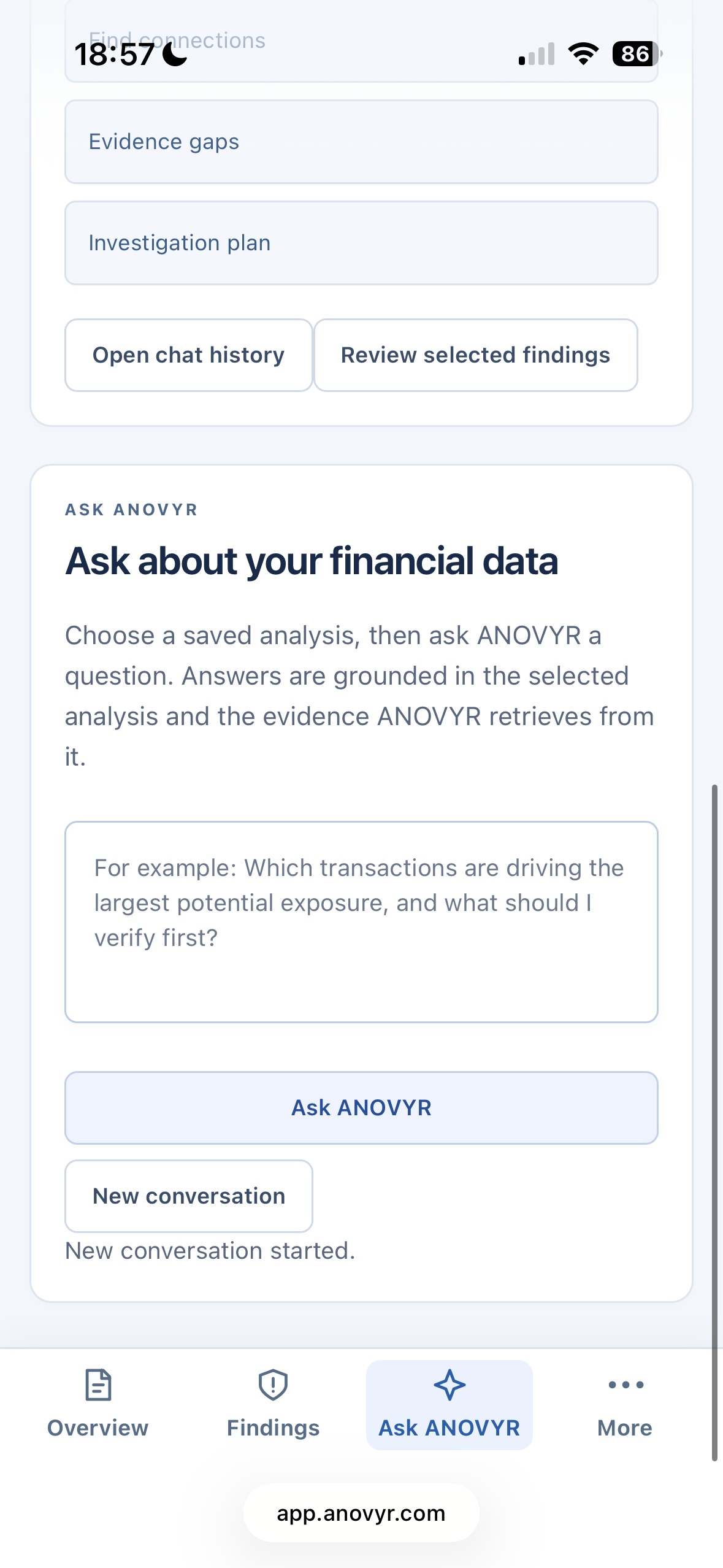
Ask ANOVYR
Ask about a selected analysis, explore the evidence and keep the conversation together. This capture shows the question interface; the website conversation examples are prepared demonstrations.
Open larger view in a new tab